
Written by: Angela Derrick, Ph.D. & Susan McClanahan, Ph.D.
Date Posted: May 23, 2025 6:49 am

Midlife often brings a quiet reckoning—a time when the life we’ve carefully built begins to feel unfamiliar or even unsatisfying. The career, the relationships, and the roles we’ve taken on may no longer fit the person we’re becoming. For many, this is not a crisis but a calling. Therapy in midlife offers a rare and powerful opportunity: to pause, reflect, and realign with a deeper sense of purpose. It’s a chance to grieve what hasn’t worked, honor what has, and begin again with greater clarity and compassion.
Contrary to the myth that you can’t teach an old horse new tricks, midlife is often when people are most ready for real transformation. With decades of experience behind them, clients bring hard-earned wisdom—and often, a deep hunger for meaning that goes beyond productivity or performance. Therapy can help individuals peel back the layers of identity shaped by obligation or fear, allowing them to reconnect with their truest values and most authentic self. Whether it’s navigating relationships, healing long-buried wounds, or daring to imagine a second act, therapy at this stage of life can be less about fixing and more about unfolding gently, courageously, and with newfound freedom.
Traditional psychology viewed older adults as having rigid personality structures that could no longer be changed. We now know that identity formation takes place throughout the life cycle and that there is meaning and purpose in exploring who we are and what we want at all phases of life.
—Dr. Susan McClanahan, Eating Disorder Specialist, Original Founder of Insight Behavioral Centers (now ERC/Pathlight), and Co-Founder of SpringSource Psychological Center.
Midlife or older adults may seek therapy for various reasons, many of which relate to the unique challenges and transitions that arise in the second half of life. You may relate to several of the following. We want to emphasize that you are never too old to seek support for these very common life challenges.
Life Transitions:
Relationship Shifts:
Unresolved Past Issues:
Mental Health Concerns:
Existential and Spiritual Concerns:
Personal Growth and Fulfillment:
In short, therapy can offer a space to reflect, recalibrate, and find new meaning, especially during this stage of life when you may feel pressured to have all the answers or to have everything “figured out.” Let’s take a closer look at Erikson’s stages of development, focusing on the later stages 7 and 8 to gain perspective and find a meaningful way forward in life’s second half.
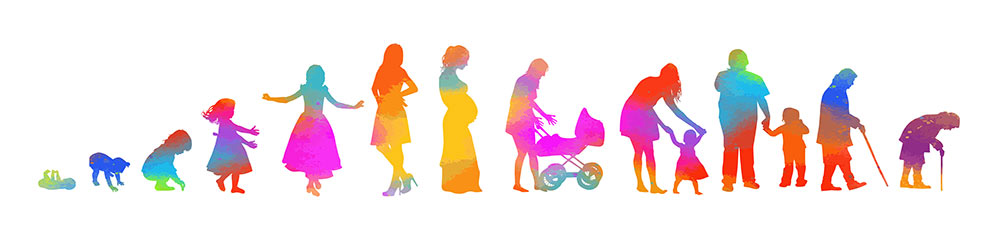
Erik Erikson’s theory of psychosocial development provides a valuable framework for understanding the emotional and psychological challenges faced during midlife and older adulthood. In his model, development continues across the lifespan, not just in childhood. Stages 7 and 8 are particularly relevant to older adults. Here is a closer look at stage 7:
Stage 7: Generativity vs. Stagnation (Midlife, ~40–65 years)
Core Question: Can I make my life count?
Generativity:
Stagnation:
Therapeutic implications:
One of the greatest challenges in this stage and one that individuals often address in therapy, is parenting teenagers and young adults. Below we provide examples of common parenting challenges and how therapy can help parents work through their own feelings about these difficulties.
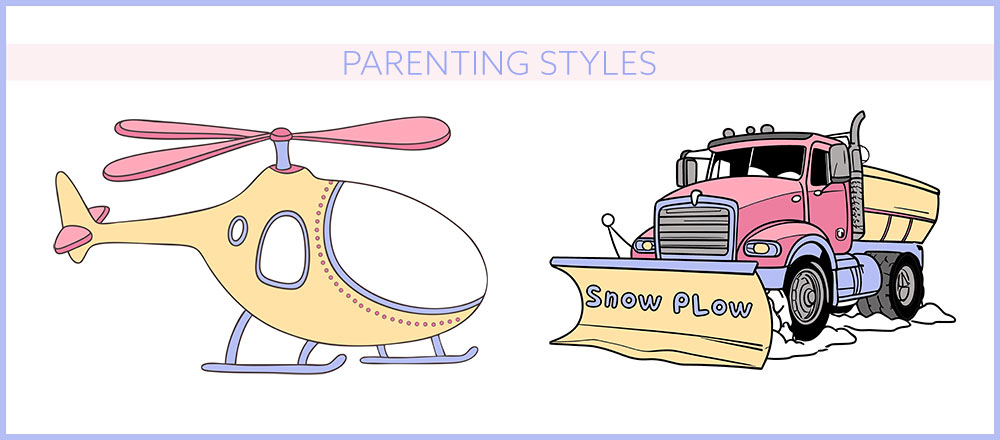
Helicopter and snowplow parenting often come from a place of love and deep concern, but they can reflect underlying struggles within the parent that therapy can help address. Here’s a look at both styles from the parents’ perspective, including what may drive the behavior and how therapy can help:
Helicopter parents are overly involved in their children’s lives, often micromanaging school, friendships, and activities to prevent failure, discomfort, or disappointment.
What the Parent May Be Struggling With:
Therapy Can Help:
Snowplow parents go ahead of their child to remove all potential barriers or failures—intervening with teachers, coaches, or bosses to smooth the child’s path.
What the Parent May Be Struggling With:
Therapy Can Help:
Underneath It All:
Both parenting styles are often attempts to manage internal emotional discomfort by controlling the external world. Therapy helps parents:
Ultimately, therapy can provide a compassionate space where parents learn to hold their children’s struggles without trying to erase them, recognizing that facing challenges, rather than being protected from them, fosters strength and confidence.
It’s also important to note that the habits associated with these parenting styles can last a lifetime and lead to pain, discomfort, and, at times, separation between parents and their adult children. It is never too late to address these dynamics, especially if they are still causing significant pain.
Erik Erikson’s eighth stage of psychosocial development, Integrity vs. Despair, typically emerges in later adulthood, as individuals reflect on their life as a whole. At this stage, the central task is to make peace with the past and find meaning in one’s journey, leading either to a sense of wholeness or to regret and despair.
Stage 8: Integrity vs. Despair (Older Adulthood, ~65+)
Core Question: Is it okay to have been me?
Integrity:
Despair:
Therapeutic implications:
Using Erikson’s model in therapy can:
This framework acknowledges that emotional development is lifelong and that healing, growth, and meaning are always possible, regardless of one’s age.

The task of the second half of life is quite simply to keep growing into your deepest and truest self. That’s all.
— Richard Rohr, OFM, from Falling Upward
Richard Rohr, a Franciscan friar and spiritual teacher, speaks deeply to themes that align with midlife transformation, ego surrender, and conscious parenting. Here’s how his teachings relate to the topics we’ve covered:
In his book Falling Upward: A Spirituality for the Two Halves of Life, Rohr explores the idea that life is divided into two essential parts:
The First Half of Life: Building identity, achieving, performing, securing safety, and belonging.
The Second Half of Life: Letting go, unlearning, and embracing mystery, meaning, and inner freedom.
Key Insights:
Crisis and Loss Are Gateways: Midlife crisis, loss, and disillusionment aren’t failures—they’re necessary for transformation. The second half of life begins when you start to live with the questions more than the answers.
Therapy as a Spiritual Path: He suggests that deep inner work, including therapy, is a sacred space for dismantling the ego and uncovering the true self beneath our roles and identities.
Suffering as Teacher: Challenges in midlife aren’t problems to fix but invitations to grow. The familiar and habitual are so falsely reassuring, and most of us make our homes there permanently. The new is always by definition unfamiliar and untested, so God, life, destiny, suffering have to give us a push—usually a big one—or we will not go.
The spirituality that Rohr offers is a deep reframe:
In the second half of life, mature people turn outward, not from a need to prove themselves, but to give freely. Generativity is the resulting overflow of the true self. Aging well means accepting life’s contradictions and living in peace with your limitations. Integrity is seen as living in alignment with your soul’s deeper wisdom.
Midlife is not a decline but a deepening.
Parenting is not control but surrender.
Therapy is not a detour from spirituality—it’s a way in.
At SpringSource, we enjoy working with midlife and older adults, and we understand the unique developmental challenges and clinical needs of this population that impact therapy. If you or someone you know would like to learn more about therapy at these life stages, please give us a call.
Call to Schedule a Consultation — 224-202-6260
SpringSource Psychological Center was founded in 2020 by two Ph.D.-licensed clinical psychologists, Dr. Susan McClanahan and Dr. Angela Derrick. They formed SpringSource as a collaborative practice to help individuals heal from eating disorders, depression, anxiety, mood disorders, trauma-related issues, relationship concerns, and life transitions. In 2025, SpringSource launched an Intensive Outpatient Program (IOP) for adults, designed to address these same issues from a developmental, relational perspective in a group setting.
The SpringSource IOP is designed to provide intensive support for adults who are struggling with eating disorders, mood and anxiety disorders, life transitions, and relationship issues.
Our scheduling is mindful of keeping clients in their regular lives by scheduling sessions at convenient times on Monday and Wednesday evenings from 5:30 to 8:30 pm, and Saturday mornings from 10:00 am to 1:00 pm
We provide skills training and support, offering great flexibility to meet each individual’s needs and create a safe, healing environment. The group can be attended in person or virtually at our Northbrook location.
Contact Us:
Northbrook Location
899 Skokie Boulevard, Suite 300
Northbrook, IL 60062
224-202-6260



We provide in-person therapy in Northbrook and Chicago, with telehealth therapy available throughout Illinois.
© 2026 SpringSource: Eating, Weight & Mood Disorders | Designed by 800Commerce
Serving: Chicagoland Area, Northbrook, Evanston, Arlington Heights, Glenview, Skokie, Palatine, Elgin, Cicero, Schaumburg, Des Plaines, Orland Park, and throughout Illinois