
Written by: Angela Derrick, Ph.D. & Susan McClanahan, Ph.D.
Date Posted: January 26, 2026 9:08 pm
If you are an adult who feels uneasy around food, your body, or eating in ways that seem “not that bad,” you are not alone. Many people in midlife secretly wonder whether what they are experiencing really counts as an eating disorder. They search questions like “Do I have an eating disorder?” or “Can adults develop eating disorders?” and often conclude that what they are going through is not serious enough.
They may tell themselves it is just stress, a phase, a health kick, menopause, grief, or lack of willpower. They often assume that eating disorders belong to teenagers, not to people who are raising families, leading teams, caring for parents, or managing full lives.
The truth is very different.
Eating disorders affect people across every stage of life. Many adults develop eating disorders for the first time in midlife. Others carry patterns that began earlier and intensified over time. Some experience a return of symptoms after years of dormancy.
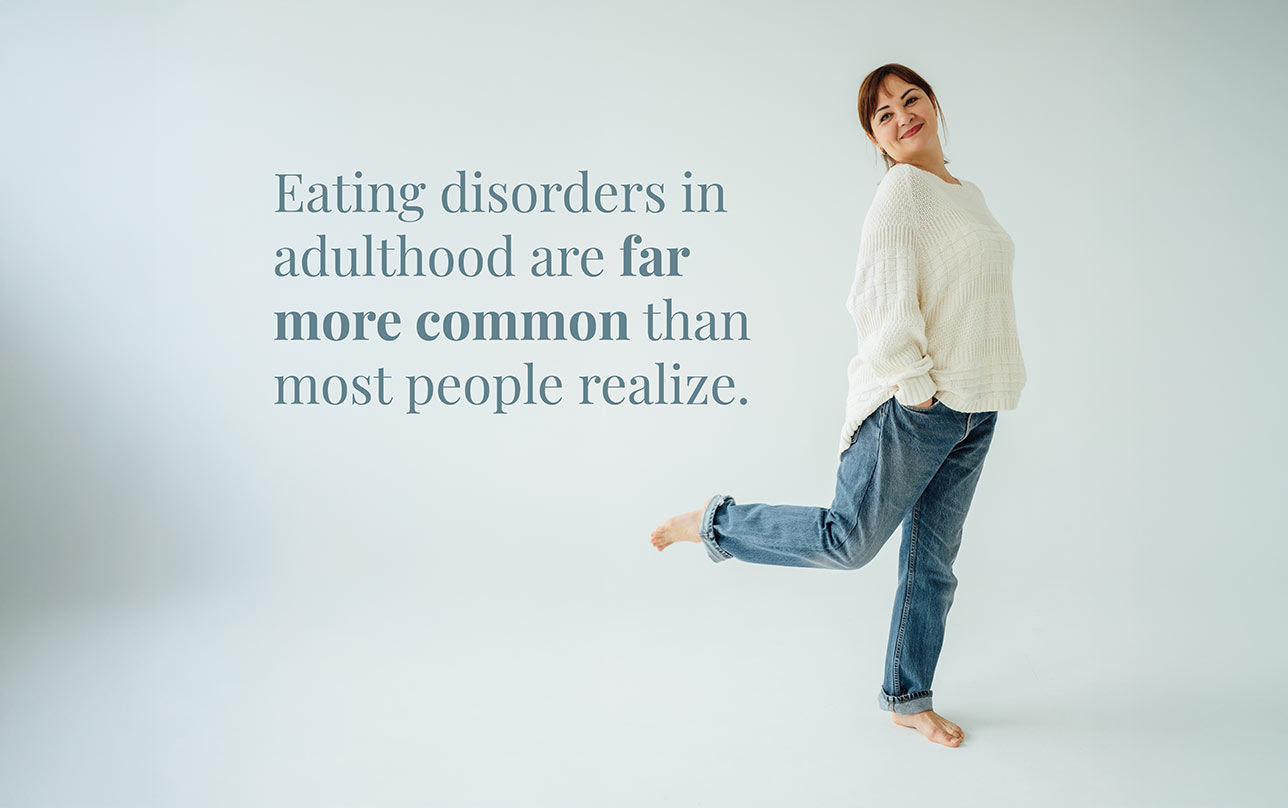
Adult eating disorders are far more common than most people realize, and they deserve thoughtful, specialized care.
If you are struggling with food in adulthood, you are not failing. You are responding to real pressures in a human way.
Midlife is a powerful developmental stage. It is a time of reckoning and reorientation. Many people are balancing gains and losses at once. They may be raising children, supporting young adults, caring for aging parents, navigating changes in relationships, bodies, careers, and health, and confronting questions about meaning, purpose, and aging.
It is often the first time that vulnerability becomes sustained rather than temporary.
Research shows that rates of depression, anxiety, and serious mental illness peak in midlife, particularly among women, LGBTQIA+ individuals, and those facing socioeconomic stress. Adults ages 40 to 60 are more likely than other age groups to engage in mental health treatment and to be prescribed antidepressants. More than 53 million adults in the United States provide unpaid caregiving for family members, placing enormous emotional and physical strain on daily life.
Eating disorders frequently emerge or intensify during this period, and are more common in midlife than previously believed. They are not simply coping habits. They are serious mental health conditions that can become medically dangerous without treatment.
According to a NEDA article “Eating Disorders in Midlife and Beyond,” research shows that eating disorders and body dissatisfaction are increasingly common in midlife and beyond, with studies finding that between 2–7.7% of women and about 1% of men over 40 meet diagnostic criteria for an eating disorder, and far more experience clinically significant symptoms that fall below the threshold for diagnosis. As many as 13% of women over 50 and 7% of men over 40 report at least one active eating-disorder symptom, and nearly three-quarters of midlife women experience weight dissatisfaction, a major risk factor for disordered eating.
Yet adult eating disorders often go unnoticed.
Dr. Angela Derrick notes, “In my practice, I am seeing more and more clients in their 40s, 50s and 60s who are struggling with an eating disorder. Some have lived for many years with varying levels of symptoms which get exacerbated during difficult moments and life transitions. I always remind my clients that the research shows that recovery at any age is still very possible even after decades of experiencing symptoms. It’s never too late to receive treatment and make meaningful changes in one’s life.”
There are many reasons eating disorders in adulthood are overlooked:
For decades, diagnostic manuals restricted anorexia to younger age groups. Until 2013, criteria even excluded menopausal women and all men by requiring the absence of menstruation. Many adults learned, implicitly or explicitly, that their suffering did not “count.”
Adults are also often skilled at hiding distress. They continue working, parenting, caregiving, and performing competence while struggling privately. Restriction, rigid routines, over-control, and perfectionism can be misread as discipline or wellness.
The result is isolation.
Eating disorders share core features across ages, but adulthood brings distinct physical, emotional, and relational consequences.
In adulthood, anorexia often carries added medical and psychosocial risk:
Patterns may be deeply ingrained after years or decades. This does not mean recovery is impossible. It means care must honor the complexity of adult experience.
Avoidant/Restrictive Food Intake Disorder is not driven by body image or weight concerns. In adults it may appear as:
Adults with ARFID often understand their limitations but feel trapped by them. Shame and frustration grow over time, especially as social and professional expectations increase.
Binge-purge cycles and compulsive eating patterns frequently persist into adulthood or emerge during periods of loss, stress, or identity shift. In men and veterans, symptoms are often masked by excessive exercise or “healthy living” culture. These disorders are commonly intertwined with depression, PTSD, and anxiety.
Many adults ask questions like:
Eating disorders are not defined by how dramatic they look from the outside. They are defined by the relationship you have with food, your body, and control, and by the cost that relationship is exacting on your life.
If food takes up an outsized amount of mental space, if eating feels fraught or rigid, if your body feels like an adversary, if shame accompanies your choices, if your world is consistently narrowing, that is worth attention.
You do not have to be in crisis to deserve care.
Eating disorders in adulthood do not discriminate.
Additional risk factors include trauma, adverse childhood experiences, marginalization, racism, microaggressions, poverty, and workplace discrimination. It’s worth noting that the pandemic further intensified isolation, control-seeking, and body surveillance.
Eating disorders often coexist with mood disorders. When depression or anxiety becomes the primary diagnosis, the eating disorder may be missed entirely.
Adults with eating disorders often face an uphill battle just to be seen. Many report dismissal by providers or internalized beliefs that they “should be past this by now.”
Recovery in adulthood can affect entire family systems. As one person shifts, others must adapt. Relationships may feel strained before they feel healthier. This does not mean change is wrong. It means it is real.
Effective adult treatment is collaborative and multidimensional. It often includes:
Isolation strengthens eating disorders. Connection weakens them. Building meaningful relationships is one of the most powerful protective factors in midlife.
If you do not have traditional forms of support, they can be built. Many people find healing through creative communities, learning spaces, advocacy, movement, or shared interests. Connection is not a luxury. It is part of recovery.
GLP-1 medications have become increasingly common in midlife, often prescribed for diabetes, metabolic conditions, or medical weight management. For many adults, these medications bring physical changes that are rapid, visible, and emotionally complex. Appetite shifts, early fullness, weight loss, and changes in hunger cues can feel both relieving and disorienting.
For individuals with a history of disordered eating or those newly struggling, GLP-1 medications can interact with vulnerability in powerful ways.
Some adults experience a sense of control or relief when food becomes easier to avoid. Others notice that the medication amplifies restrictive patterns they had worked hard to soften. Still others feel emotionally “flat” or disconnected from their bodies as appetite and pleasure around food change. What begins as a medical intervention can unintentionally reinforce old beliefs about worth, discipline, or safety.
For people who have spent decades in diet culture, the societal narrative around these medications can be especially potent. Messages of transformation, praise, and moralized weight loss can awaken perfectionism, fear of regain, or the belief that smaller is safer.
Adults may find themselves asking:
These questions signal that the relationship between food, body, self-image, and control may be shifting.
GLP-1s can be life-changing and medically appropriate for many people. They can also complicate recovery or mask the early signs of an eating disorder. Reduced appetite can make restriction appear effortless. Rapid weight changes can intensify body surveillance. Nausea or gastrointestinal side effects can lead to normalization of avoidance. Emotional responses may lag behind physical change.
This is why mental health support matters.
At SpringSource, we work with adults taking GLP-1 medications who are noticing unexpected emotional, relational, or behavioral shifts around food and body. We help clients differentiate between medical effects and disordered patterns. We explore the meaning of change, the fear beneath control, and both the grief and relief that can accompany a body that looks different. We support people in building a relationship with nourishment that is not driven by shame, urgency, or fear.
You do not need to choose between medical care and psychological care. Both can coexist.
If a medication is changing how you relate to food, your body, or yourself, that experience deserves space and support.
Yes. Many people develop eating disorders for the first time in their 40s, 50s, or beyond. Others have long-standing patterns that intensify during midlife stressors such as caregiving, relationship transitions, grief, health changes, or a shifting sense of self.
You can have a clinically significant eating disorder at any weight. Weight is not a reliable indicator of severity. What matters is your relationship with food, your body image, your eating behaviors, and their impact on your mental, physical, and relational well-being.
If food, eating, weight, or body shape takes up excessive mental space, or if your rules and routines feel rigid, shame-driven, or hard to break, it is worth exploring. Disordered eating often shows up as restriction, bingeing, purging, compulsive exercise, persistent guilt after eating, or anxiety around eating in social settings.
Adult eating disorders are often overlooked due to stigma, the myth that eating disorders only affect teens, and because many adults appear high-functioning. Symptoms may also be misattributed to hormonal shifts, gastrointestinal issues, stress, or lifestyle changes without assessing the underlying psychological drivers.
ARFID (Avoidant/Restrictive Food Intake Disorder) involves restrictive eating that is not driven by weight or shape concerns. In adults, it may include severe sensory aversions, fear of choking or vomiting, a very limited range of “safe” foods, avoidance of social eating, and nutritional deficiencies or fatigue.
Eating disorders frequently co-occur with depression, anxiety, trauma-related symptoms, or chronic stress. Sometimes mood symptoms are treated first while the eating disorder remains hidden. Integrated care addresses both the eating patterns and the emotional pain underneath them.
They can. GLP-1 medications may reduce appetite and change hunger and fullness cues, which can unintentionally reinforce restriction, avoidance, body surveillance, or fear of regain in vulnerable individuals. Rapid physical change and social feedback can also intensify perfectionism or anxiety. Support can help you separate medical effects from disordered patterns and protect your mental health.
Effective treatment is collaborative and often includes therapy, eating disorder-informed nutrition support, medical monitoring when appropriate, and psychiatric care for mood and anxiety symptoms. Depending on needs, treatment may include individual therapy, group support, family or partner involvement, or a higher level of care such as an intensive outpatient program.
If your relationship with food or your body is shrinking your life, increasing shame, affecting your mood, or feeling hard to control, it is a good time to reach out. You do not have to wait until you are in crisis to deserve care.
Yes. SpringSource: Eating, Weight & Mood Disorders provides adult-centered care for anorexia, ARFID, bulimia, binge eating, and co-occurring mood, anxiety, trauma, and relationship concerns. We offer individual therapy and our Adult Hybrid Intensive Outpatient Program (IOP), with in-person care in downtown Chicago and Northbrook and virtual services throughout Illinois.
You can call us at 224-202-6260, email in**@****************er.com, or schedule a free 15-minute consultation through our website.
At SpringSource: Eating, Weight & Mood Disorders, we understand that eating disorders in midlife and beyond are complex, layered, and influenced by personal life experiences. Using a holistic approach, we are committed to offering therapy that goes beyond a diagnosis to include whole-person care.
Our clinicians are experienced in treating adult anorexia nervosa, atypical anorexia ARFID, bulimia nervosa, binge eating disorder, and co-occurring mood, anxiety, trauma, and relationship concerns. We meet our clients where they are and offer harm-reduction methods as needed, tailored to each individual’s needs and readiness for change. We collaborate with medical and nutritional providers and offer both individual therapy and our hybrid IOP for Adults for those who need more structured support.
We believe there are many paths to healing. You do not have to be in crisis to deserve care. You do not have to fit a stereotype. You do not have to carry this alone.
With offices in downtown Chicago and Northbrook, and virtual services throughout Illinois, we are here to help you reclaim the parts of your life that have narrowed or gone missing.
Healing in adulthood is not about becoming someone new. It is about returning to your true self.
Contact us today to schedule a consultation.



We provide in-person therapy in Northbrook and Chicago, with telehealth therapy available throughout Illinois.
© 2026 SpringSource: Eating, Weight & Mood Disorders | Designed by 800Commerce
Serving: Chicagoland Area, Northbrook, Evanston, Arlington Heights, Glenview, Skokie, Palatine, Elgin, Cicero, Schaumburg, Des Plaines, Orland Park, and throughout Illinois