
Our therapists specialize in atypical anorexia treatment, providing care for individuals seeking an eating disorder therapist in Chicago or Northbrook, with virtual eating disorder therapy available throughout Illinois.
You do not have to look a certain way to be struggling.
Many people living with atypical anorexia hear the same message of doubt over and over: Am I sick enough to need help? Because their bodies may fall within a “normal” or higher weight range, their suffering is often overlooked by others and minimized by themselves. Yet the thoughts, fears, and behaviors are just as consuming as those seen in more widely recognized forms of anorexia.
At SpringSource: Eating, Weight & Mood Disorders, our therapists provide specialized atypical anorexia treatment in Chicago, Northbrook, and virtual therapy throughout Illinois.
At SpringSource, we understand that eating disorders cannot be diagnosed by appearance alone. Atypical anorexia is real. It is serious. And it deserves compassionate, specialized care.
Whether you are seeking an eating disorder therapist in Chicago, Northbrook, or virtual therapy throughout Illinois, our clinicians are here to help you feel seen, validated, and supported.
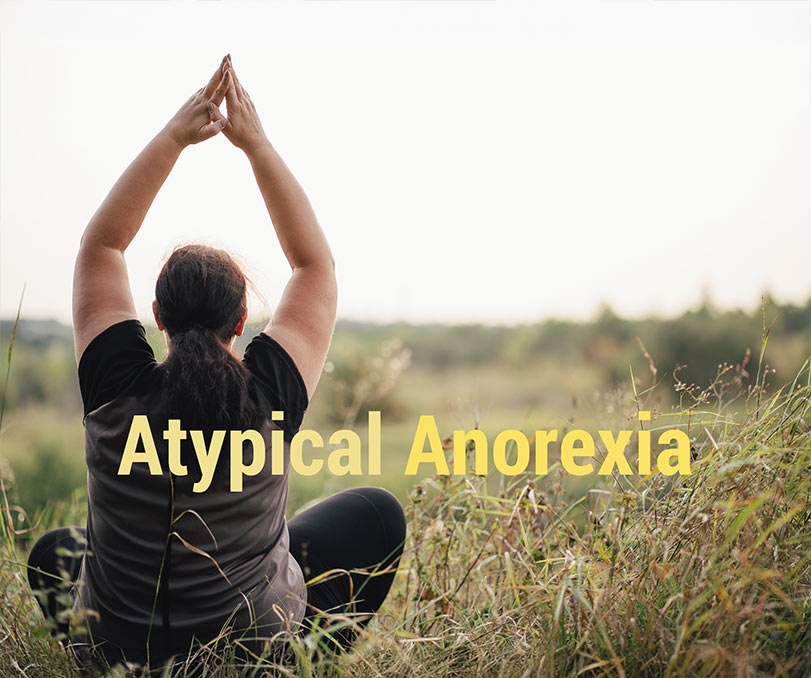
Atypical anorexia is a subtype of anorexia nervosa recognized within the eating disorder category of OSFED. It involves the same restrictive eating patterns, intense fear of weight gain, and preoccupation with food and body image. The difference is that individuals with atypical anorexia are not medically underweight.
This distinction has profound consequences.
Because weight does not fall below a certain threshold, people with atypical anorexia are often told they are “fine,” “healthy,” or “not sick enough.” In reality, their bodies and minds are experiencing the effects of malnutrition, stress, and relentless self-monitoring. Medical complications can be just as severe, including electrolyte imbalances, cardiovascular strain, hormonal disruption, and cognitive changes.
Atypical anorexia is recognized in the DSM-5 under the category of Other Specified Feeding or Eating Disorders (OSFED). It is not a lesser diagnosis. It is a different presentation of the same life-threatening illness.
Weight stigma plays a powerful role in how atypical anorexia is misunderstood and under-treated.
In healthcare, individuals in larger bodies are more likely to have symptoms attributed to weight alone. Providers may focus on weight loss as a solution, overlooking signs of malnutrition, restriction, or compulsive exercise. This can delay diagnosis and discourage people from seeking help at all.
In daily life, people in larger bodies are often labeled as lacking discipline or willpower. These messages can intensify shame and drive further restriction. Many individuals with atypical anorexia feel invisible in their illness and unworthy of care.
At SpringSource, we actively challenge these assumptions. Eating disorders exist across all body sizes, genders, ages, and backgrounds. You do not have to prove your pain.
“Classic anorexia is more serious.”
In reality, atypical anorexia can be just as medically and psychologically dangerous. Individuals experience the same cognitive distortions, fear of weight gain, and behavioral patterns. Because diagnosis is often delayed, risks can be even higher.
“Only women are affected.”
Eating disorders impact people of all genders. Men, boys, and non-binary individuals are significantly underdiagnosed and less likely to receive timely care.
“You have to be visibly underweight to have anorexia.”
You do not. Atypical anorexia involves significant weight loss and restrictive behavior, even when weight remains within or above a “normal” range. The internal experience and health risks are real regardless of appearance.
You do not need every symptom to deserve care. If food, body, and control have begun to dominate your inner world, help is appropriate.
Recovery from atypical anorexia requires more than changing eating patterns. It involves healing your relationship with your body, emotions, and sense of self.
Our eating disorder treatment for adults, adolescents, and young adults integrates:
Medical Collaboration
We work alongside medical providers to monitor health and address complications of malnutrition.
Psychotherapy
Treatment may include CBT, DBT, RO-DBT, interpersonal therapy, psychodynamic therapy, and trauma-informed approaches. Therapy focuses on thoughts, emotions, relationships, and the deeper meaning food has come to hold.
Nutritional Support
We collaborate with dietitians who specialize in eating disorders to help normalize eating and reduce fear around nourishment.
Skill Building
You learn how to regulate emotions, tolerate distress, and respond to urges without harm.
Family Support
For adolescents and young adults, family-based approaches can be integrated to strengthen recovery.
Our clinicians also utilize harm reduction and hybrid models when appropriate, meeting you where you are while keeping health and safety at the center.
Atypical anorexia thrives in invisibility. It grows in the space between “I am struggling” and “But I should be able to handle this.”
You do not have to wait until your body changes to justify care. You do not have to collapse to be believed.
Eating disorders are illnesses, not moral failures. They deserve treatment, not willpower.
At SpringSource: Eating, Weight & Mood Disorders, we provide compassionate, evidence-based eating disorder therapy in Chicago, Northbrook, and virtually throughout Illinois. We believe healing is personal, layered, and always possible.
You do not have to do this alone.
Call 224-202-6260 or schedule a free 15-minute consultation. We are here to walk with you toward recovery.
SpringSource: Eating, Weight & Mood Disorders provides specialized eating disorder therapy in Chicago and Northbrook, with virtual care available throughout Illinois. Our clinicians work with adolescents and adults seeking compassionate, evidence-based treatment for eating disorders, including anorexia nervosa, atypical anorexia, bulimia nervosa, binge eating disorder, and ARFID.
Our Chicago office is located in the Loop at 53 W. Jackson Boulevard, serving individuals throughout downtown Chicago, River North, West Loop, Lincoln Park, and surrounding neighborhoods. Our Northbrook office serves clients across the North Shore, including Glenview, Wilmette, Highland Park, Deerfield, and Northfield.



We provide in-person therapy in Northbrook and Chicago, with telehealth therapy available throughout Illinois.
© 2026 SpringSource: Eating, Weight & Mood Disorders | Designed by 800Commerce
Serving: Chicagoland Area, Northbrook, Evanston, Arlington Heights, Glenview, Skokie, Palatine, Elgin, Cicero, Schaumburg, Des Plaines, Orland Park, and throughout Illinois