
Written by: Angela Derrick, Ph.D. & Susan McClanahan, Ph.D.
Date Posted: July 11, 2026 4:59 am
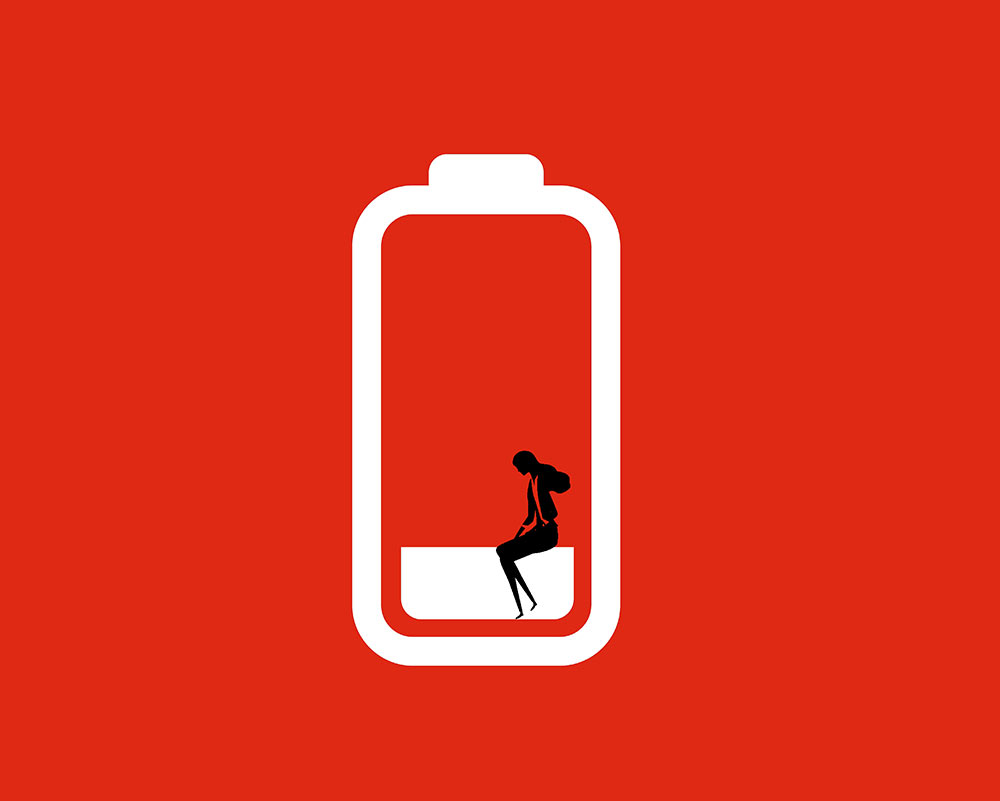
There are moments in life when many of us begin to wonder if something is wrong with us.
We feel emotionally drained. Our patience is shorter than it used to be. We struggle to concentrate. Small decisions can feel overwhelming. We cry more easily, withdraw from the people we love, or feel a heaviness we don’t understand and can’t explain.
It is all too easy to assume these experiences may be signs of personal weakness. Or maybe it’s simply that we are not coping well enough, especially when we are sure that others are handling the same challenges just fine.
Let’s first practice considering the idea that emotional exhaustion is not a signal of personal failings.
Perhaps you are having a reasonable response to carrying more than one person should ever be expected to hold. Or as we have heard in recovery circles, you are having a normal reaction to an abnormal situation.
At SpringSource, we see people managing a variety of stressors all at the same time. Work demands, relationship challenges, financial pressures, caregiving responsibilities, health concerns, eating disorders, anxiety & depression, major life transitions, and an increasing sense that the world itself feels heavier than it once did. Any one of these is enough to exhaust a person. Many of them, when they occur together, are genuinely difficult to sustain.
Life does not fit into neat compartments. It is messy and layered. The grief and stress that can accumulate through these experiences deserve our self-compassion and attention.
Understanding and making sense of these experiences begins with expanding our definition of grief and understanding the role that grief can play in contributing to our stress.
When most people hear the word grief, they think about the death of someone they love.
That is certainly grief, but it is not the only form grief can take.
Grief can arise whenever something meaningful changes or is lost. We grieve relationships that end, careers that change, homes we leave behind, changes in our health, children growing up and leaving the nest, dreams that no longer seem possible, or versions of ourselves we thought we would become.
Many of these losses are contained internally. In other words, invisible. They do not come with definitive endings, memorial services, or sympathy cards, yet they can leave us feeling equally disoriented.
Psychologist and researcher Pauline Boss has spent decades studying a particular kind of grief she calls ambiguous loss. Ambiguous loss arises when our grief is pointed at experiences that remain uncertain or unresolved. It might be the loss of a relationship that technically still exists but no longer feels like itself. The loss of a version of the future that gradually became impossible. The loss of safety, certainty, or a sense of belonging in the world.
Boss describes ambiguous loss as producing a kind of frozen grief, a state in which people cannot fully mourn because the loss itself has no clear edges. There is no ceremony, no closure, no recognized moment of ending. Just a low-grade and persistent heaviness that many people turn inward and blame themselves for. When several of these experiences occur at once, emotional exhaustion often follows.
Emotional exhaustion rarely stays emotional for long.
When we carry significant stress over an extended period, the body registers it often before the mind fully does. People describe waking up exhausted despite sleeping. They notice that small physical irritations, a headache, a stiff neck, or a persistent sense of tightness in the chest have become familiar companions. Appetite often changes. The immune system, which is deeply connected to the stress response, can become less resilient. Sleep, which the nervous system depends on to process and recover from the day’s emotional load, becomes disrupted and less restorative.
The American Psychological Association’s Stress in America survey found that 73 percent of Americans reported feeling overwhelmed by the number of crises facing the world in 2023. That number reflects not just a cultural mood but a physiological reality. Chronic stress activates the body’s threat response systems. When those systems remain activated for weeks and months at a time, the physical cost accumulates.
None of this means something is permanently wrong. It means the body is communicating valuable information. The emotional strain you have been experiencing is real, and it deserves an outlet.
Therapy, and in some seasons a more intensive level of support, can provide a safe and effective place to make sense of what you have been living through and begin to feel like yourself again.
Over the past several years, life has changed rapidly and often painfully.
Many people have experienced personal loss while simultaneously navigating uncertainty, division, economic pressures, and a seemingly endless stream of difficult news. Whether those events touch us directly or unfold hundreds of miles away, we are immediately and repeatedly exposed to them through our phones, televisions, and social media feeds.
Researchers and clinicians have begun to document what many people are already experiencing. Prolonged exposure to distressing news has been linked to increased stress, anxiety, and emotional exhaustion. The American Psychological Association has described this experience as media saturation overload, while others have coined terms like headline anxiety and doomscrolling to capture the psychological strain of near-constant exposure to alarming information.
A 2025 paper in JMIR Mental Health noted that extensive media exposure perpetuates stress and is associated with anxiety, depression, and emotional exhaustion, describing what researchers called a self-perpetuating cycle of worry and media consumption that is difficult to interrupt once it takes hold.
Our brains were simply not designed to absorb an unrelenting stream of distress twenty-four hours a day. The human nervous system evolved to respond to threats that were immediate, local, and time-limited. What many people are navigating now is sprawling, ongoing, and often without a clear resolution in sight. The cumulative effect on mental health is significant.
This does not mean we should stop caring about the world around us. Caring is one of the things that makes us human. Awareness and engagement matter. But caring has a cost, and that cost needs to be acknowledged.
For many people, emotional exhaustion is not simply the result of one difficult event. It is the cumulative effect of enduring personal struggles alongside the emotional weight of living through an increasingly uncertain period in history. We are absorbing more distress per day than any previous generation has had to contend with.
Without realizing it, we may begin to believe that our exhaustion means we are not resilient enough.
More often, it means we are expecting way too much of ourselves.
Sometimes what we experience is more than stress.
Sometimes it is grief.
Sometimes it is heartbreak.
Sometimes it is the pain of watching the world feel increasingly disconnected from the values we hold most deeply.
Regardless of our personal beliefs or backgrounds, many people describe feeling devastated, disoriented, or deeply discouraged by rising conflict, isolation, prejudice, injustice, and feeling disconnected from one another. Others worry about their children’s future, the health of their communities, or challenges that seem larger than any one individual can solve.
When our deepest values seem out of step with what we experience around us, that disconnect can create profound emotional distress.
The important thing to remember is that these reactions are deeply human.
Feeling overwhelmed does not mean something is wrong with you.
It means your mind and body are responding honestly to the weight of the world you have been trying to support.
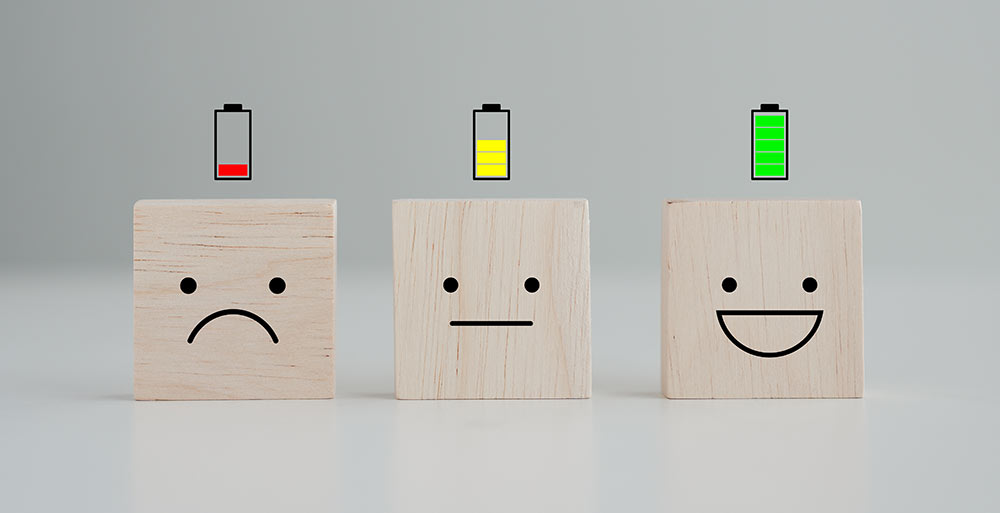
When emotional exhaustion sets in, it is tempting to look for solutions that match the scale of the problem. But some of the most effective things people can do are smaller and more immediate than that.
Give it a name. Emotional exhaustion is often made heavier by the pressure to keep moving as though everything is fine. Simply acknowledging, to yourself or to someone you trust, that you are struggling and that what you are living through is genuinely hard, can shift something in ways that are difficult to predict until you try.
Create deliberate limits around news and distressing content. This is not avoidance. It is an act of self-preservation. Research consistently shows that more exposure to distressing news does not make us more informed in ways that help. It makes us more anxious in ways that cost us. Choosing specific times to check the news or deciding not to look at a screen during the first and last hour of the day can meaningfully reduce the cumulative load, as can finding trusted, non-alarming sources of information.
Return to the body. Emotional exhaustion tends to pull us into our heads, into rumination, worry, and the endless processing of things we cannot resolve. Physical movement, even brief and gentle movement, breathing practices, or simply stepping outside, can interrupt that cycle and offer the nervous system a corrective experience.
Choose one small values-aligned act. When the world feels heavy, it can be hard to know what to do with that feeling. Research on psychological wellbeing consistently shows that acting in accordance with our values, even in small ways, strengthens our sense of agency and meaning. That might mean calling someone who is isolated. Writing something honest. Showing up for a commitment we made. Choosing kindness in a moment when it would be easier not to.
None of these things erase what is hard. They are not meant to. They are meant to remind you that you are still here, still capable, and still the person whose choices shape the life you want in meaningful ways.
Dr. Angela Derrick notes, “I often find that clients are surprised to realize that what they are experiencing is grief. Once grief is identified and named, we can begin the important work of moving through the grieving process. I often invite clients to consider how they would respond to someone they care about who was grieving. Most would offer patience, understanding, compassion, and the recognition that a meaningful loss or change has occurred and needs to be processed. It can be profoundly impactful for clients to recognize that they, too, deserve that same level of care and understanding. When grief is viewed through this lens, clients are often better able to approach themselves with greater self-compassion and to be more intentional about attending to their emotional, physical, and relational needs as they heal.”
When life feels overwhelming, it is easy to believe we must solve every problem before we can begin to feel better.
Fortunately, healing rarely works that way.
Healing does not begin with changing the world.
Healing begins by refusing to let the world decide who we become.
Every time we choose compassion instead of contempt, curiosity instead of certainty, connection instead of isolation, honesty instead of avoidance, or hope instead of despair, we reinforce the values we want to see reflected in our families and communities.
These choices may not make headlines.
They may not change the world overnight.
But healthy communities have never been built by grand gestures alone.
They are built through millions of ordinary acts of kindness, courage, integrity, and care.
Our individual choices matter.
Not because they solve every problem, but because they shape the kind of people we become in the face of life’s challenges.
There is no single right amount of support, and emotional needs change throughout our lives. There are seasons when weekly therapy provides exactly the space we need to process grief, navigate stress, and reconnect with ourselves. There are also seasons when what you are living through genuinely requires a deeper level of care.
If emotional exhaustion is making it difficult to function in daily life, needing additional support is not a sign that you have failed. It may simply be a sign that your nervous system needs more consistent care than weekly therapy alone can provide.
For those times, the SpringSource Intensive Outpatient Program for adults offers a structured, compassionate, evidence-based approach that bridges the gap between weekly therapy and inpatient care. Through multiple therapy sessions each week, skills groups, psychiatric support when appropriate, and connection with others facing similar challenges, the IOP provides the additional support many people need to begin feeling like themselves again while continuing to live at home and maintain many of their daily responsibilities.
Sometimes healing requires more than determination.
Sometimes it requires more support.
Both are acts of courage.
When everything feels heavy, it is natural to wonder whether anything we do can truly make a difference.
The answer may be smaller and more hopeful than we expect.
History is often remembered through extraordinary moments, but it is sustained through ordinary people who consistently choose to live according to their values, even when doing so feels difficult. And we need each other to do this.
Your kindness matters.
Your integrity matters.
Your willingness to ask for help matters.
Your decision to keep showing up for yourself, your family, your recovery, and your community matters.
None of these choices erase grief.
They don’t eliminate uncertainty.
But together they become the foundation upon which healthier lives, stronger relationships, and more compassionate communities are built.
If life feels like too much right now, that is important information. It is telling you that you need more support than you have been giving yourself. Whether that means beginning weekly therapy or exploring something more intensive through the SpringSource IOP for Adults, the path forward starts with one step: allowing someone to walk alongside you. No one was ever meant to do this alone.
At SpringSource: Eating, Weight & Mood Disorders, we provide individual therapy and our hybrid Intensive Outpatient Program for adults navigating emotional exhaustion, grief, anxiety, depression, eating disorders, and life transitions. With offices in Chicago and Northbrook and virtual care available throughout Illinois, we are currently accepting new clients.
We offer a free 15-minute consultation with our intake clinician. Call us at 224-202-6260, fill out our contact form, or schedule your free consultation online.
Recovery, and relief, are always within reach.
SpringSource is a clinician-owned practice specializing in eating disorders, weight-related concerns, and mood disorders across the lifespan. Founded by Dr. Susan McClanahan and Dr. Angela Derrick, both Ph.D. licensed clinical psychologists and Certified Eating Disorder Specialists with decades of leadership in the field, SpringSource provides evidence-based, weight-inclusive, and deeply individualized care. With offices in downtown Chicago and Northbrook and virtual therapy across Illinois, we are currently accepting new clients for individual therapy and our hybrid Intensive Outpatient Program for Adults.
Ambiguous loss and unresolved grief
Boss, P. (1999), Ambiguous Loss: Learning to Live with Unresolved Grief, Harvard University Press
https://www.hup.harvard.edu/books/9780674003811
APA Stress in America Survey — 73 percent of Americans felt overwhelmed by world crises
American Psychological Association (2023)
https://www.apa.org/news/press/releases/stress/2023/collective-trauma-recovery
Media saturation overload, headline anxiety, and doomscrolling
Psychiatric Times (2025)
https://www.psychiatrictimes.com/view/media-excess-mental-health
Media-induced uncertainty and mental health
Kesner et al. (2025), JMIR Mental Health
https://mental.jmir.org/2025/1/e68640



We provide in-person therapy in Northbrook and Chicago, with telehealth therapy available throughout Illinois.
© 2026 SpringSource: Eating, Weight & Mood Disorders | Designed by 800Commerce
Serving: Chicagoland Area, Northbrook, Evanston, Arlington Heights, Glenview, Skokie, Palatine, Elgin, Cicero, Schaumburg, Des Plaines, Orland Park, and throughout Illinois