
Our experienced eating disorder therapists specialize in higher weight eating disorder treatment and therapy, offering in-person care in Chicago and Northbrook, as well as virtual services throughout Illinois.
Eating disorders do not have a “look.”
They exist in bodies of every size. Yet individuals in higher weight bodies are among the most underdiagnosed and undertreated when it comes to eating disorders.
Many people are told to lose weight when they are actually struggling with restriction, bingeing, purging, compulsive exercise, or severe food anxiety. Some are praised for behaviors that are medically dangerous. Others are dismissed entirely.
At SpringSource: Eating, Weight & Mood Disorders, we understand that eating disorders in higher weight bodies are real, serious, and deserving of specialized care. You do not have to become visibly underweight to qualify for help. You do not have to prove your suffering.
Whether you are seeking eating disorder therapy in Chicago, Northbrook, or virtual support throughout Illinois, we provide weight-inclusive, evidence-based treatment grounded in respect and dignity.
Higher weight eating disorders occur when individuals experience serious eating disorder symptoms such as restriction, bingeing, purging, or compulsive exercise while living in bodies that fall within average or higher weight ranges. Because many eating disorder stereotypes focus on underweight bodies, these individuals are frequently overlooked or misdiagnosed despite experiencing significant medical and psychological risk.
Many people search for answers because they feel they have an eating disorder, but are not underweight. Eating disorders occur across the full spectrum of body sizes.
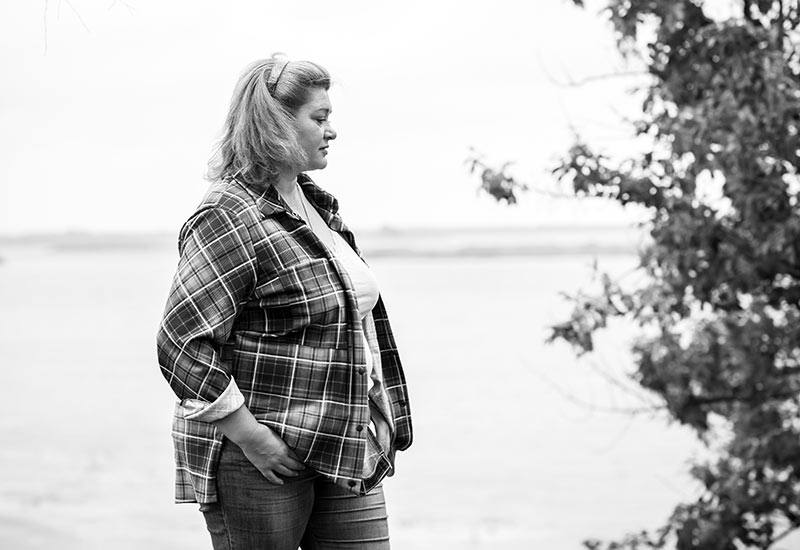
Weight stigma has shaped how eating disorders are understood in both healthcare and culture.
Historically, anorexia was associated only with visibly underweight individuals. As a result:
Research now makes clear that medical risk is determined by behaviors and physiological instability, not body size alone. Individuals in higher weight bodies can experience:
Eating disorders in higher weight bodies are not less serious. In many cases, they are diagnosed later, increasing risk.
While any eating disorder can occur at any size, we frequently treat:
Atypical Anorexia Nervosa
Severe restriction, intense fear of weight gain, and rapid weight loss without falling below an “underweight” threshold. Learn more about Atypical Anorexia.
Bulimia Nervosa
Cycles of bingeing and purging, including vomiting, laxatives, or compulsive exercise. Learn more about Bulimia.
Binge Eating Disorder
Recurrent episodes of eating large amounts of food accompanied by shame, distress, and loss of control. Learn more about Binge Eating Disorder.
OSFED / Other Specified Feeding or Eating Disorders
Clinically significant eating pathology that does not fit neatly into a single category. Learn more about OSFED.
Compulsive Exercise Patterns
Excessive movement driven by fear, guilt, or weight control.
Higher weight clients may also struggle with chronic dieting, emotional eating, trauma-related food behaviors, and internalized weight stigma.
You might relate to:
If food and weight are organizing your mental and emotional life, support is appropriate.
At SpringSource: Eating, Weight & Mood Disorders, we actively challenge weight stigma in clinical care.
Our treatment does not assume that weight loss is the goal. Instead, we focus on:
We draw from evidence-based approaches including:
For clients navigating GLP-1 medications, we provide psychological support that addresses body changes, self-image shifts, and complex emotions.
Care is collaborative and individualized. Your body is not the enemy.
SpringSource: Eating, Weight & Mood Disorders has a new process-oriented group for individuals in higher weight bodies who are navigating eating disorders, body image distress, shame, and the emotional impact of weight-related stigma.
Many higher weight individuals carry years of shame, medical dismissal, and cultural messaging that their bodies are problems to solve.
Weight stigma can lead to:
Healing often includes not only addressing eating behaviors, but also untangling internalized stigma and reclaiming self-worth.
Recovery in a higher weight body is not about forcing your body into a different size. It is about restoring health, stability, and peace.
Clients often notice:
Healing is not about appearance. It is about freedom.
You do not have to wait for your body to change.
You do not have to become medically unstable to be believed.
You do not have to prove your suffering.
Eating disorders affect people across the weight spectrum. Treatment should too.
At SpringSource: Eating, Weight & Mood Disorders, we provide compassionate, evidence-based eating disorder therapy in Chicago and Northbrook, as well as virtual care throughout Illinois. We offer free 15-minute consultations so you can explore next steps without pressure.
Call 224-202-6260 or reach out through our contact form. You deserve care that sees the whole of you.
SpringSource: Eating, Weight & Mood Disorders provides specialized eating disorder therapy in Chicago and Northbrook, with virtual care available throughout Illinois. Our clinicians work with adolescents and adults seeking compassionate, evidence-based treatment for eating disorders, including anorexia nervosa, atypical anorexia, bulimia nervosa, binge eating disorder, and ARFID.
Our Chicago office is located in the Loop at 53 W. Jackson Boulevard, serving individuals throughout downtown Chicago, River North, West Loop, Lincoln Park, and surrounding neighborhoods. Our Northbrook office serves clients across the North Shore, including Glenview, Wilmette, Highland Park, Deerfield, and Northfield.



We provide in-person therapy in Northbrook and Chicago, with telehealth therapy available throughout Illinois.
© 2026 SpringSource: Eating, Weight & Mood Disorders | Designed by 800Commerce
Serving: Chicagoland Area, Northbrook, Evanston, Arlington Heights, Glenview, Skokie, Palatine, Elgin, Cicero, Schaumburg, Des Plaines, Orland Park, and throughout Illinois