
Written by: Angela Derrick, Ph.D. & Susan McClanahan, Ph.D.
Date Posted: July 4, 2025 4:20 am
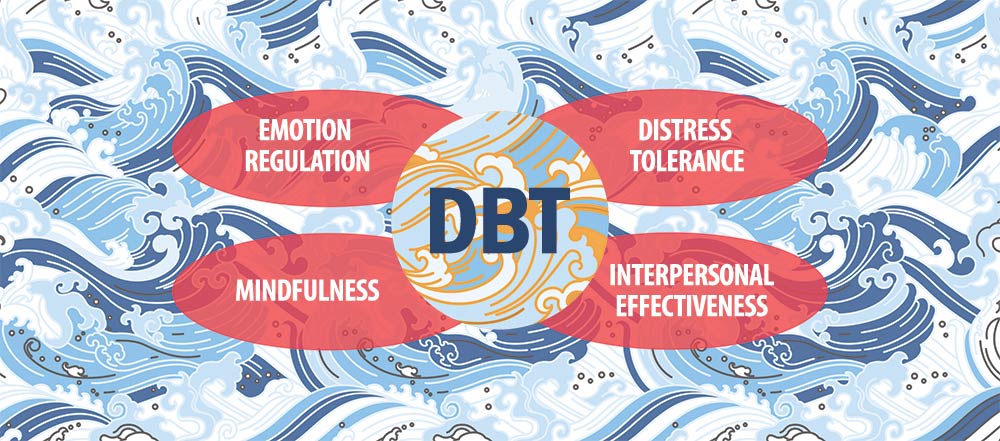
Dialectical Behavior Therapy (DBT) is an evidence-based form of cognitive behavioral therapy designed to help people who struggle with intense emotions, self-destructive behaviors, and unstable relationships. Originally developed to treat borderline personality disorder, DBT has since been adapted for a wide range of mental health challenges, including depression, eating disorders, substance use, and PTSD. At its core, DBT teaches four key skill areas: mindfulness, distress tolerance, emotion regulation, and interpersonal effectiveness. What sets DBT apart is its balance of acceptance and change, helping individuals validate their emotional experiences while also learning practical tools to shift harmful patterns. DBT empowers people to manage crisis moments, build emotional resilience, and create more stable, meaningful lives.
DBT provides skills to manage the ups and downs of life. I believe everyone can benefit from learning more effective ways of managing their relationship with self and others, particularly during trying times.
—Dr. Angela Derrick, co-owner of SpringSource: Eating, Weight & Mood Disorders
Dialectical Behavior Therapy (DBT) and Cognitive Behavioral Therapy (CBT) are both evidence-based treatments that help people manage emotional and behavioral challenges, but they differ in focus, structure, and approach
Core Focus:
CBT primarily targets changing negative thought patterns to improve mood and behavior. It’s based on the idea that thoughts, feelings, and behaviors are interconnected, and by challenging distorted thinking, people can change how they feel and act.
DBT, while rooted in CBT, was developed for people who experience extreme emotional intensity and interpersonal conflict. It blends cognitive-behavioral techniques with acceptance strategies, focusing not only on changing behaviors but also on validating emotions and learning to tolerate distress.
Acceptance vs. Change:
CBT emphasizes change—how to fix faulty thinking and behaviors. DBT balances change and acceptance, teaching that people can hold two opposing truths at once (e.g., I’m doing the best I can—AND—I can find ways to do better).
Skills Training:
While CBT offers tools like thought records and behavior experiments, DBT teaches a structured set of life skills in four areas:
Structure and Support:
CBT is usually conducted one-on-one. DBT combines individual therapy, weekly skills training groups, homework, and often phone coaching for real-time support during emotional crises.
Target Populations:
CBT is widely used for depression, anxiety, OCD, and more. DBT was originally developed for borderline personality disorder and chronic suicidality, but it’s now used for a range of high-risk, emotionally dysregulated behaviors (e.g., self-harm, eating disorders, and substance abuse).
In Summary:
CBT helps reframe thoughts to change behavior; DBT teaches how to accept and survive intense emotions while building a life worth living. Both are powerful—your needs and emotional experiences can help determine which is the better fit.
Let’s examine a scenario in which DBT can help. Imagine a 22-year-old whose days oscillated between numbness and chaos—shouting matches with loved ones, impulsive decisions she couldn’t explain, and a deep, aching sense of emptiness she couldn’t shake. She’d been told she was “too much,” “too sensitive,” or “attention-seeking.” Diagnosed with borderline personality disorder after psychiatric hospitalization for a suicide attempt, she had lost hope that anything could truly help her.
Then she was referred to a professional for Dialectical Behavior Therapy.
For those who experience intense emotional pain, unstable relationships, and a desperate need for relief, DBT can be life-saving. Developed specifically for those at high risk of self-harm and emotional dysregulation, DBT not only manages symptoms; it teaches how to step out of survival mode and into real healing.
Let’s look at another example where a 28-year-old professional found herself crying in her car after yet another overwhelming workday; she wasn’t sure what exactly was wrong, just that everything felt like too much. One minute she was confident and creative, the next she was spiraling into self-doubt, replaying conversations in her head, and questioning her worth. Her relationships were strained by emotional outbursts she didn’t understand, and no amount of journaling or self-help books seemed to make a difference.
For this type of individual, who is performing at a high level but emotionally exhausted, Dialectical Behavior Therapy offers more than just coping skills. It provides a pathway to emotional stability, deeper self-understanding, and healthier connections.

Dialectical Behavior Therapy is a comprehensive therapeutic approach that treats a range of mental health conditions, particularly those involving emotional dysregulation, such as depression, anxiety, post-traumatic stress disorder (PTSD), and borderline personality disorder, to name a few. One of the core components of DBT is its focus on emotional regulation—the ability to understand, manage, and constructively respond to intense feelings. By fostering a deeper understanding of emotions and promoting healthy coping techniques, DBT empowers individuals to lead more balanced and fulfilling lives.
Mindfulness involves being present in the moment and observing thoughts and emotions without judgment. This practice helps individuals better understand their emotional experiences and reduces the tendency to react impulsively. By cultivating mindfulness, people can create a space between their emotions and actions, allowing for more intentional and thoughtful responses.
The Emotion Regulation Module includes strategies for identifying, naming, and processing feelings, thus reducing vulnerability to emotional dysregulation. This module helps individuals recognize the triggers and patterns of their maladaptive responses and learn ways to proactively influence their experiences, thereby increasing positive emotional outcomes.
A key aspect of emotion regulation in DBT is developing coping strategies to manage intense emotions. Techniques for reducing emotional intensity include self-soothing activities, distraction, and grounding exercises. DBT also emphasizes the importance of building a life worth living, encouraging individuals to participate in activities that bring joy and fulfillment.
The Distress Tolerance Module teaches skills that help individuals navigate acute emotional crises without making the situation. It’s intended for times when emotions become overwhelming, yet immediate change isn’t possible—or wise.
Unlike emotion regulation, which focuses on preventing and reducing emotional intensity over time, distress tolerance involves getting through the moment without falling apart or acting impulsively (e.g., self-harming, yelling, quitting a job, or unhealthy substance use). Distress tolerance teaches us to accept reality when it cannot be changed right away and helps to build resilience for future emotional storms.
Interpersonal Effectiveness is a module focused on helping people build and maintain healthy relationships, assert their needs, and set boundaries—all while preserving their self-respect.
Many people being treated with DBT struggle with unstable or intense relationships, fear of abandonment, and difficulty saying no. This module teaches how to skillfully navigate these challenges without aggression, passivity, or manipulation.
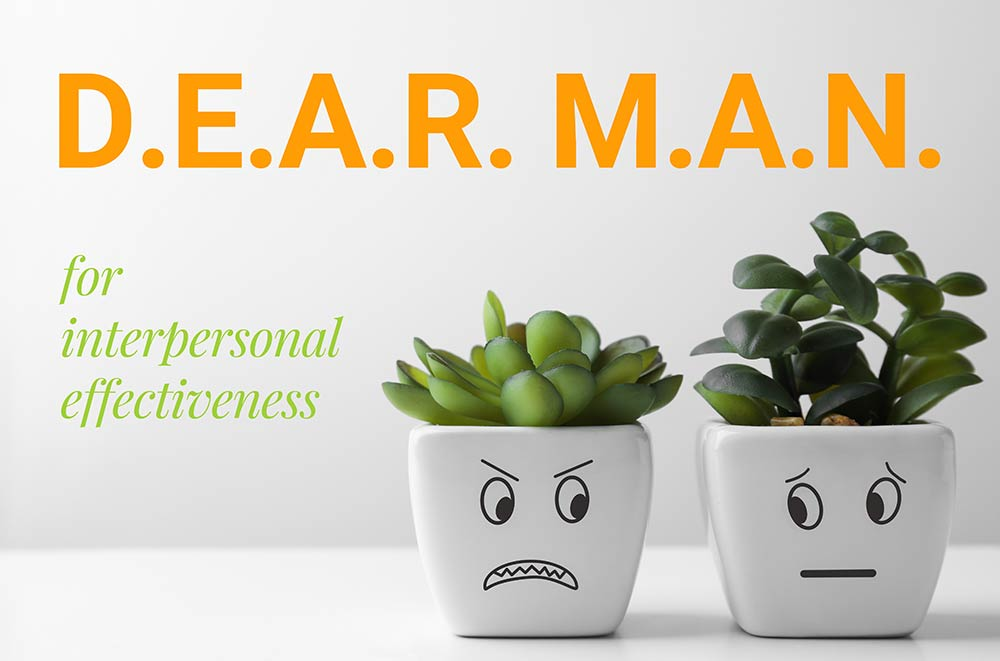
DEAR MAN is a powerful interpersonal effectiveness skill in Dialectical Behavior Therapy (DBT) designed to help individuals assertively express their needs, desires, and boundaries while maintaining healthy relationships. It is especially useful when you need to ask for something, say no, or negotiate with others.
D – Describe
E – Express
A – Assert
R – Reinforce
M – Mindful
A – Appear Confident
N – Negotiate
DEAR MAN is a practical tool that can be applied in various situations, from personal relationships to professional interactions. It helps you express your needs clearly, respectfully, and effectively, increasing the likelihood of a positive outcome. A therapist skilled in DBT can help guide, support, and encourage you when using the DEAR MAN framework. A therapist or trusted friend can also help you practice through role play or simply listen to you navigate and get comfortable with this process.

Radical Acceptance is a concept within Dialectical Behavior Therapy that focuses on fully and completely accepting reality as it is rather than fighting against it or wishing it were different. It’s not about approving of or liking the situation but rather about recognizing and accepting it without judgment or resistance. Radical Acceptance is used as a tool to reduce emotional suffering and to prevent the escalation of distress in situations that cannot be changed.
Radical Acceptance is a powerful tool for dealing with life’s most difficult situations. It allows individuals to find peace and strength even in the face of adversity by fully embracing the reality of their experiences.
A Therapist skilled in Dialectical Behavior Therapy can be a great help in learning how to practice Radical Acceptance and in processing through your life experiences, where distress can be lessened through Radical Acceptance. If you are curious about how DBT could help in your own life, please reach out to a therapist trained in this therapeutic modality.
At SpringSource: Eating, Weight & Mood Disorders, we specialize in DBT and various other evidence-based therapies. We recognize that the healing journey is unique, and we prioritize compassionately addressing each person’s individual needs. We offer both in-person and virtual appointments at our downtown Chicago and Northbrook, IL offices. Call us today at 224-202-6260 to learn more and arrange your free initial consultation. We would love to hear from you.
Spring Source is now offering a hybrid group therapy IOP for adults struggling with depression, mood and anxiety disorders, eating disorders, and challenges related to life transitions. Learn more here—and feel free to contact us with any questions or interest in this program.



We provide in-person therapy in Northbrook and Chicago, with telehealth therapy available throughout Illinois.
© 2026 SpringSource: Eating, Weight & Mood Disorders | Designed by 800Commerce
Serving: Chicagoland Area, Northbrook, Evanston, Arlington Heights, Glenview, Skokie, Palatine, Elgin, Cicero, Schaumburg, Des Plaines, Orland Park, and throughout Illinois